The EMINENCE project (Eliminating Onchocerciasis with Moxidectin in Endemic Hotspots of Central Africa) has an ambitious goal: to contribute to the elimination of onchocerciasis in persistent transmission hotspots of Central Africa through the introduction of new moxidectin-based treatment strategies.
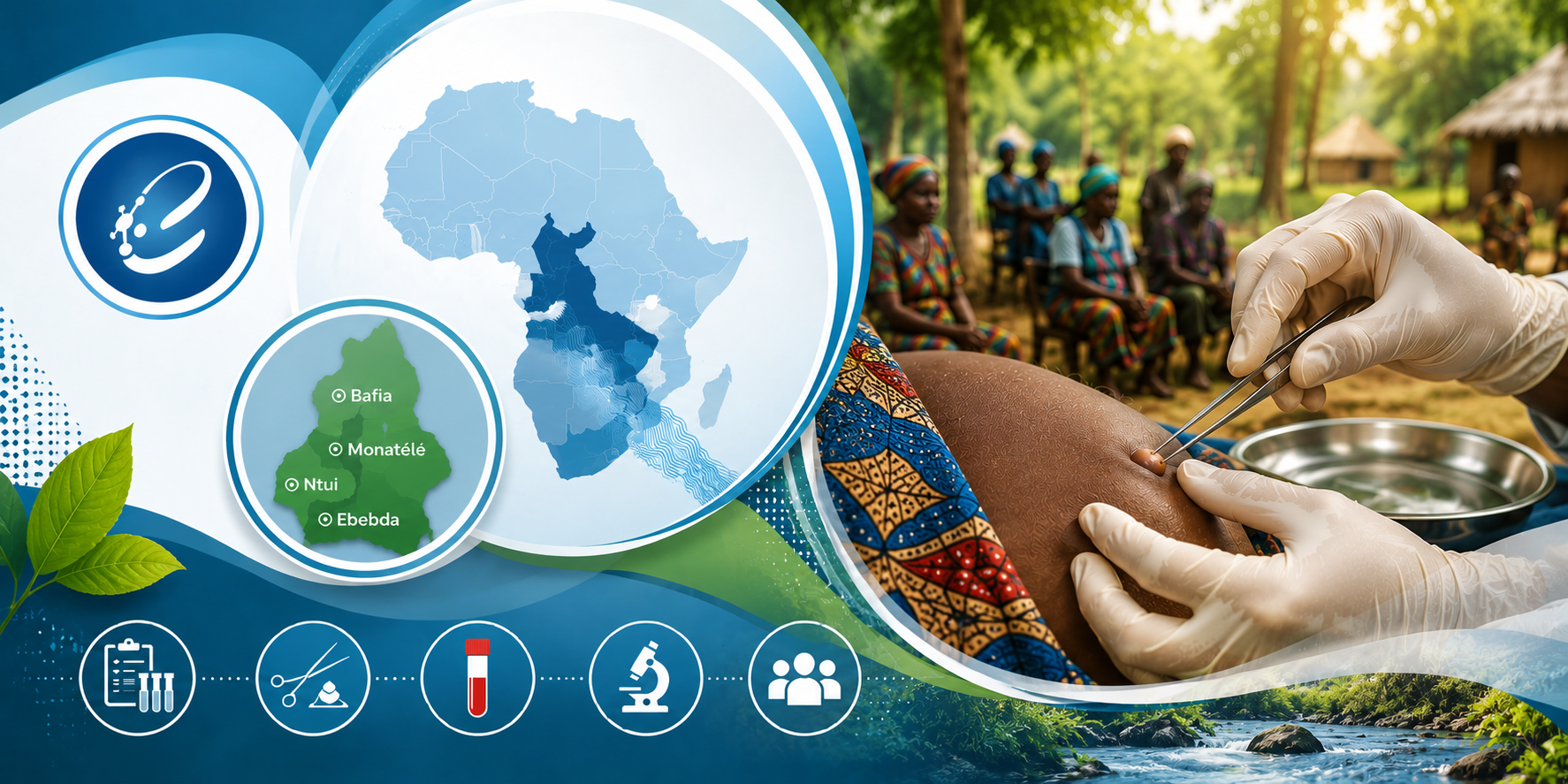
Following a first phase of baseline data collection conducted in March 2026 in the health districts of Bafia, Monatélé, Ntui, and Ebebda, the project is entering a new major stage: the nodulectomy and blood sampling campaign, which will take place between April and May 2026.
Following a first phase of baseline data collection conducted in March 2026 in the health districts of Bafia, Monatélé, Ntui, and Ebebda, the project is entering a new major stage: the nodulectomy and blood sampling campaign, which will take place between April and May 2026.
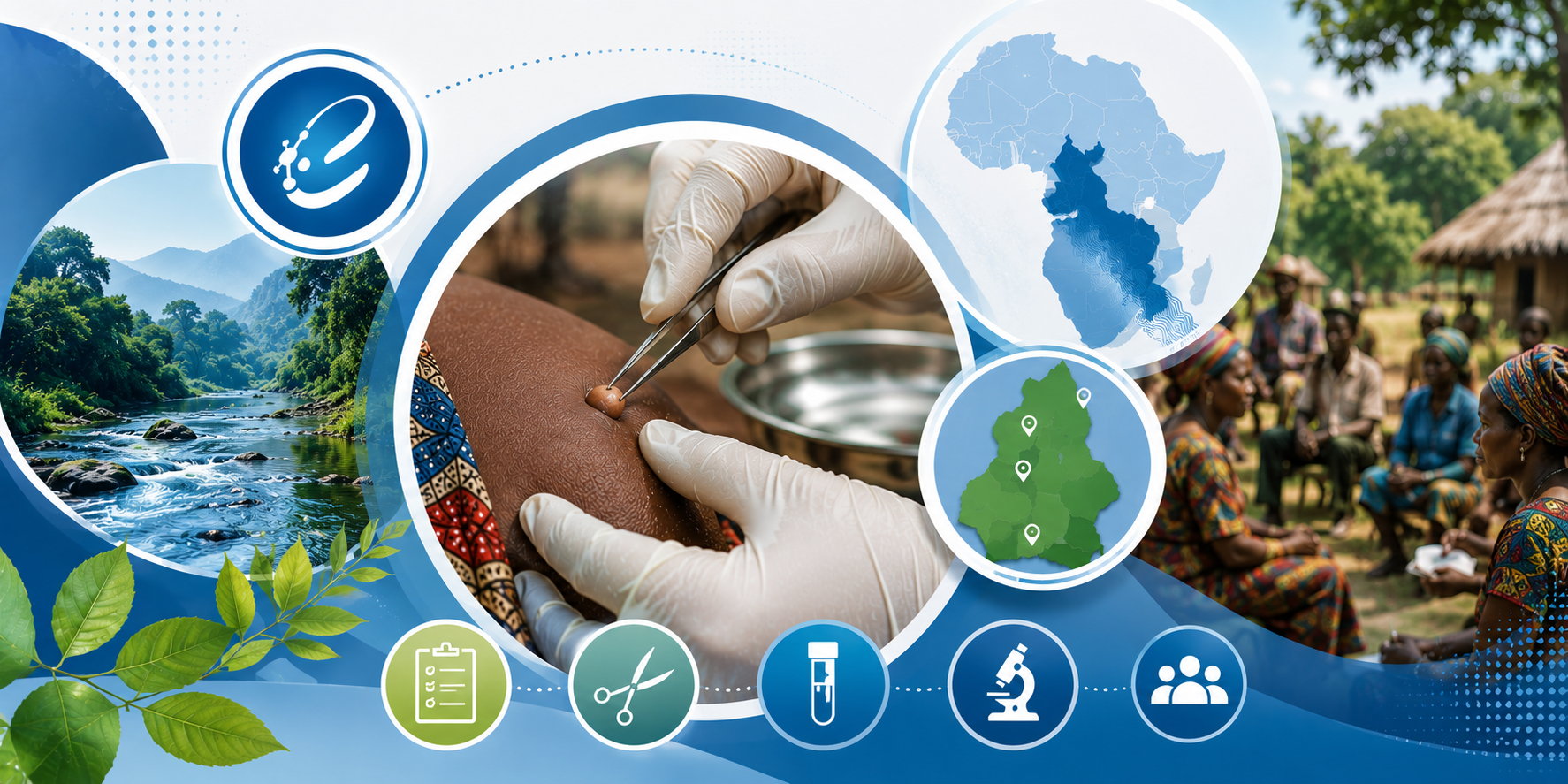
A nodulectomy is a simple surgical procedure that consists of removing a subcutaneous nodule containing adult Onchocerca volvulus worms, the parasite responsible for onchocerciasis, also known as river blindness.
In infected individuals, adult worms live clustered within these nodules located beneath the skin. They can survive for several years and produce millions of microfilariae that migrate throughout the body and cause the manifestations of the disease, including skin lesions and eye damage.
Performed under local anaesthesia by qualified medical personnel, nodulectomy allows for the safe removal of these adult worms while providing valuable information for scientific research.
In infected individuals, adult worms live clustered within these nodules located beneath the skin. They can survive for several years and produce millions of microfilariae that migrate throughout the body and cause the manifestations of the disease, including skin lesions and eye damage.
Performed under local anaesthesia by qualified medical personnel, nodulectomy allows for the safe removal of these adult worms while providing valuable information for scientific research.

The primary objective of the EMINENCE project is to evaluate the effectiveness of moxidectin, administered once or twice a year, compared with the current standard strategy of Community-Directed Treatment with Ivermectin (CDTI).
While skin examinations allow researchers to measure the presence of microfilariae, nodulectomies provide a unique opportunity to directly study the adult worms contained within the nodules. They therefore constitute an essential parasitological endpoint for assessing the true impact of treatment on the parasite at different stages of its life cycle.
The excised nodules will be preserved according to strict biobanking protocols to enable in-depth laboratory analyses. These analyses will help improve our understanding of parasite biology, its response to treatment, and the mechanisms involved in disease transmission.
At the same time, blood samples will be collected from participants with detectable microfilariae to support immunological, serological, and molecular analyses that will strengthen the scientific foundation of the project.
While skin examinations allow researchers to measure the presence of microfilariae, nodulectomies provide a unique opportunity to directly study the adult worms contained within the nodules. They therefore constitute an essential parasitological endpoint for assessing the true impact of treatment on the parasite at different stages of its life cycle.
The excised nodules will be preserved according to strict biobanking protocols to enable in-depth laboratory analyses. These analyses will help improve our understanding of parasite biology, its response to treatment, and the mechanisms involved in disease transmission.
At the same time, blood samples will be collected from participants with detectable microfilariae to support immunological, serological, and molecular analyses that will strengthen the scientific foundation of the project.